HI guys most of the times when u insert the the pendrive the virus is coming to our systems to solve the problem try this method
GO TO RUN->TYPE CMD-> PRESS ENTER
TYPE THE PEN DRIVE FOLDER NAME LIKE I,J,H I: PRESS ENTER
THEN TYPE DIR/W/A-> PRESS ENTER
it will show the viruses in the pen drive along vth data
THEN TYPE attrib -r -a -s -h *.*
DEL FILE NAME
then remove the viruses which u have the doubt about that file
Nicks!
Friday, November 19, 2010

youtube reality don't destroy your time for download videos from youtube friends...
in simple words
c:\user\youname\appdata\local\google\chrome\userda ta\Default\Cache.and select some if any file was big in size than right click open with vlc or other softwares..
{important information}:before you play videos from any sites first open the directory.i told you already where is the file will stay.go there and see when u play video on web.there will created one file.and see file size will increasing same time more n more n more.that means it will be a lovable video file for you.when buffering end than copy the file without closing tabs where u buffered video.copy the big sized file on your desktop and rename it.like {atif aslam meri kahani.avi}..that all solve dear
Nicks!
c:\user\youname\appdata\local\google\chrome\userda ta\Default\Cache.and select some if any file was big in size than right click open with vlc or other softwares..
{important information}:before you play videos from any sites first open the directory.i told you already where is the file will stay.go there and see when u play video on web.there will created one file.and see file size will increasing same time more n more n more.that means it will be a lovable video file for you.when buffering end than copy the file without closing tabs where u buffered video.copy the big sized file on your desktop and rename it.like {atif aslam meri kahani.avi}..that all solve dear
Nicks!
Shadows
An unnoticed identity clouded,
restless beneath your feet
sorrow life years buried in dirt
billions of cares unforgiven.
Scar a lifeline on granite stone
living wasted nothings
These unspoken distant calls repel,
dying seeds of hateful notes
Use nitrous pins to expose
this evil flesh inside
revealing impure fragile wings
that can't ever be hidden
Yourself seen towards judgement
flow an ocean of tears seeping
downwards to Hell.
restless beneath your feet
sorrow life years buried in dirt
billions of cares unforgiven.
Scar a lifeline on granite stone
living wasted nothings
These unspoken distant calls repel,
dying seeds of hateful notes
Use nitrous pins to expose
this evil flesh inside
revealing impure fragile wings
that can't ever be hidden
Yourself seen towards judgement
flow an ocean of tears seeping
downwards to Hell.
Home Remedies for Hair Loss
Hair loss is a metabolic disorder where hair starts thinning, falling, or disappearing. The papilla which is an upgrowth at the base of the follicle, actually produces hair when a special group of cells turn amino acids into keratin, a type of protein of which hair is made. The rate of production of these protein 'building blocks' determines hair growth. Hair loss is more common to men than to women.
Symptoms of Hair Loss
Following are the major hair loss symptoms:
1. Falling of hairs.
2. Thinning of hairs
Causes of Hair Loss
Following are the major hair loss causes:
1. Lack of vitamins (specially vitamin B6 and folic acid) in diet
2. Inadequate nutrition and improper diet
3. Stress, worry, anxiety, and sudden shock
4. Heredity factors
5. Prolonged Illness (like typhoid, syphilis, chronic cold, influenza, and anaemia)
6. Unclean condition of the scalp
7. Poor blood circulation
Natural Home Remedies for Hair Loss
Following are some of the effective home remedies for hair loss:
1. Boil one cup mustard oil with four tablespoon heena (mehendi) leaves. Filter it and keep it in a bottle. Message it on the bald patches regularly. It is very effective natural remedy for baldness.
2. Grind fenugreek seeds with water and apply on the head. Leave for at least 40 minutes before washing. Continue it for a month.
3. Do a vigorous rubbing of the scalp with fingers after washing the hair with cold water. It is also a good natural hair loss treatment.
4. Rub the bald area with onions till it becomes red. Then apply honey on the bald area. It is very effective natural cure for baldness
5. Make a mixture of honey with egg yolk. Properly massage on the scalp and hairs. Leave for a 1/2 hour, then wash
6. Prepare a home made shampoo by adding 5 tbsp of curd, 1 tbsp of lemon juice and 2 tbsp of gram raw (chholia) powder. Apply it on the head for an hour and then wash
7. Apply fresh leaf juice of amaranth to the hair. It will help the growth of the hair and keep it soft.
Hair Loss Treatment and Advice
1. Include plenty of protein and iron in your diet
2. Take mineral supplements like calcium, magnesium, and zinc
3. Do not use hair dryers
4. Do meditation to reduce stress and tension
5. Don’t pull on your hair with a brush or comb when it is wet
6. Do not use hair dyes (synthetic hair colors)
7. Eat green and leafy vegetables
Herbal Remedies for Hair Loss
1. Mix 100 g each of amla (goose berry), reetha, and shikakai and boil in two liters of water till the liquid reduces to half. It is good herbal remedy for hair loss
2. Massage the scalp and hair with coconut milk or Aloe Vera gel. Leave it for ½ hour, and then rinse with warm water. Do this thrice a week
3. Mix aloe Vera with herbal powder triphala and apply it to the hairs. Continue this for three to six months. New hairs will start growing.
Symptoms of Hair Loss
Following are the major hair loss symptoms:
1. Falling of hairs.
2. Thinning of hairs
Causes of Hair Loss
Following are the major hair loss causes:
1. Lack of vitamins (specially vitamin B6 and folic acid) in diet
2. Inadequate nutrition and improper diet
3. Stress, worry, anxiety, and sudden shock
4. Heredity factors
5. Prolonged Illness (like typhoid, syphilis, chronic cold, influenza, and anaemia)
6. Unclean condition of the scalp
7. Poor blood circulation
Natural Home Remedies for Hair Loss
Following are some of the effective home remedies for hair loss:
1. Boil one cup mustard oil with four tablespoon heena (mehendi) leaves. Filter it and keep it in a bottle. Message it on the bald patches regularly. It is very effective natural remedy for baldness.
2. Grind fenugreek seeds with water and apply on the head. Leave for at least 40 minutes before washing. Continue it for a month.
3. Do a vigorous rubbing of the scalp with fingers after washing the hair with cold water. It is also a good natural hair loss treatment.
4. Rub the bald area with onions till it becomes red. Then apply honey on the bald area. It is very effective natural cure for baldness
5. Make a mixture of honey with egg yolk. Properly massage on the scalp and hairs. Leave for a 1/2 hour, then wash
6. Prepare a home made shampoo by adding 5 tbsp of curd, 1 tbsp of lemon juice and 2 tbsp of gram raw (chholia) powder. Apply it on the head for an hour and then wash
7. Apply fresh leaf juice of amaranth to the hair. It will help the growth of the hair and keep it soft.
Hair Loss Treatment and Advice
1. Include plenty of protein and iron in your diet
2. Take mineral supplements like calcium, magnesium, and zinc
3. Do not use hair dryers
4. Do meditation to reduce stress and tension
5. Don’t pull on your hair with a brush or comb when it is wet
6. Do not use hair dyes (synthetic hair colors)
7. Eat green and leafy vegetables
Herbal Remedies for Hair Loss
1. Mix 100 g each of amla (goose berry), reetha, and shikakai and boil in two liters of water till the liquid reduces to half. It is good herbal remedy for hair loss
2. Massage the scalp and hair with coconut milk or Aloe Vera gel. Leave it for ½ hour, and then rinse with warm water. Do this thrice a week
3. Mix aloe Vera with herbal powder triphala and apply it to the hairs. Continue this for three to six months. New hairs will start growing.
Vitamins Overview Summary
Vitamins: Overview Summary
Vitamins were discovered by Dutch physician, Christiaan Eijkmann, who won the 1929 Nobel prize in physiology and medicine. Vitamins are essential for life and contribute to good health by regulating metabolism and assisting the biochemical processes that release energy from digested foods. Therefore, a "vitamin" is any of the organic compounds required by the body in small amounts (micronutrients), to protect health and for proper growth in living creatures.
Vitamins also assist in the formation of hormones, blood cells, nervous-system chemicals, and genetic material. The various vitamins are not chemically related, and most differ in their physiological actions. They generally act as catalysts, combining with proteins to create metabolically active enzymes that in turn produce hundreds of important chemical reactions throughout the body. Without vitamins, many of these reactions would slow down or cease. The intricate ways in which vitamins act on the body, however, are still far from clear.
The 13 well-identified vitamins are classified according to their ability to be absorbed in fat or water. The fat-soluble vitamins include vitamin A, vitamin D, vitamin E, and vitamin K. These are generally consumed along with fat-containing foods. Because they can be stored in the body*s fat, they do not have to be consumed every day. The water-soluble vitamins include the eight B vitamins and vitamin C. These cannot be stored by the body and must be consumed frequently, preferably every day.
Only vitamin D can be manufactured by the body. All others must be derived from the diet. Lack of sufficient vitamin intake causes a wide range of health problems and dysfunctions. The U.S. Food and Nutrition Board of the National Research Council has published recommended dietary allowances (RDA) for vitamins, minerals, and other nutrients. RDAs are normally expressed in international units (IU) or milligrams. For adults and children of normal health, these recommendations are useful guidelines not only for professionals in nutrition but also for the growing number of families and individuals who eat irregular meals and rely on prepared foods (many of which are now required to carry nutritional labeling). Unfortunately, these RDAs give only the bare minimum required to ward off deficiency diseases such as rickets, beri-beri, scurvy, and night blindness. What they do not account for are the amounts needed to maintain maximum health.
All vitamin supplements work best when taken along with food. Typically, oil-soluble vitamins should be taken before meals and water soluble vitamins should be taken after meals.
Vitamin A (beta carotene, retinol)
Recommended Dietary Allowances: Men = 5000 IU (or 3 mg beta carotene); Women = 4000 IU (or 2.4 mg beta carotene)
Vitamin A is a pale yellow primary alcohol derived from carotene. It affects the formation and maintenance of skin, mucous membranes, bones, and teeth; vision; and reproduction. An early deficiency symptom is night blindness (difficulty in adapting to darkness); other symptoms are excessive skin dryness; lack of mucous membrane secretion, causing susceptibility to bacterial invasion; and dryness of the eyes due to a malfunctioning of the tear glands, a major cause of blindness in children in developing countries.
The body obtains vitamin A in two ways. One is by manufacturing it from carotene, a vitamin precursor found in such vegetables as carrots, broccoli, squash, spinach, kale, and sweet potatoes. The other is by absorbing ready-made vitamin A from plant-eating organisms. In animal form, vitamin A is found in milk, butter, cheese, egg yolk, liver, and fish-liver oil. Although one-third of American children are believed to consume less than the recommended allowance of vitamin A, sufficient amounts can be obtained in a normally balanced diet rather than through supplements. Excess vitamin A can interfere with growth, stop menstruation, damage red blood corpuscles, and cause skin rashes, headaches, nausea, and jaundice
B Complex Vitamins
As its name implies, vitamin B complex is a combination or mixture of eight essential vitamins. Although each is chemically distinct, the B vitamins coexist in many of the same foods and often work together to bolster metabolism, maintain healthy skin and muscle tone, enhance immune and nervous system function, and promote cell growth and division - including that of the red blood cells that help prevent anemia. Together they also combat stress, depression, and cardiovascular disease. B vitamins, which are water soluble, are dispersed throughout the body and must be replenished daily with any excess excreted in the urine. People susceptible to vitamin B deficiency include pregnant women, nursing mothers, vegetarians, alcoholics, "sugar-holics", the elderly, and people with malabsorption conditions or who take certain antibiotics long-term. Symptoms of B vitamin deficiency can include oily or scaly skin, upset stomach, headaches, anxiety, moodiness, and heart arrhythmias.
Vitamin B1 (thiamine)
Recommended Dietary Allowances: Men = 1.5 mg; Women = 1.1 mg
Thiamine, or vitamin B1, a colorless, crystalline substance, acts as a catalyst in carbohydrate metabolism, enabling pyruvic acid to be absorbed and carbohydrates to release their energy. Thiamine also plays a role in the synthesis of nerve-regulating substances. Deficiency in thiamine causes beriberi, which is characterized by muscular weakness, swelling of the heart, and leg cramps and may, in severe cases, lead to heart failure and death. Many foods contain thiamine, but few supply it in concentrated amounts. Foods richest in thiamine are pork, organ meats (liver, heart, and kidney), brewer*s yeast, lean meats, eggs, leafy green vegetables, whole or enriched cereals, wheat germ, berries, nuts, and legumes. Milling of cereal removes those portions of the grain richest in thiamine; consequently, white flour and polished white rice may be lacking in the vitamin. Widespread enrichment of flour and cereal products has largely eliminated the risk of thiamine deficiency, although it still occurs today in nutritionally deficient alcoholics.
Vitamin B2 (riboflavin)
Recommended Dietary Allowances: Men = 1.7 mg; Women = 1.3 mg; Pregnant Women = 1.6 mg
Riboflavin, or vitamin B2, like thiamine, serves as a coenzyme-one that must combine with a portion of another enzyme to be effective-in the metabolism of carbohydrates, fats, and, especially, respiratory proteins. It also serves in the maintenance of mucous membranes. Riboflavin deficiency may be complicated by a deficiency of other B vitamins; its symptoms, which are not as definite as those of a lack of thiamine, are skin lesions, especially around the nose and lips, and sensitivity to light. The best sources of riboflavin are liver, milk, meat, dark green vegetables, whole grain and enriched cereals, pasta, bread, and mushrooms.
Vitamin B3 (niacin)
Recommended Dietary Allowances: Men = 19 mg; Women = 15 mg; Pregnant Women = 17 mg
Niacin, also known as nicotinic acid and vitamin B3, also works as a coenzyme in the release of energy from nutrients. A deficiency of niacin causes pellagra, the first symptom of which is a sunburnlike eruption that breaks out where the skin is exposed to sunlight. Later symptoms are a red and swollen tongue, diarrhea, mental confusion, irritability, and, when the central nervous system is affected, depression and mental disturbances. The best sources of niacin are liver, poultry, meat, canned tuna and salmon, whole grain and enriched cereals, dried beans and peas, and nuts. The body also makes niacin from the amino acid tryptophan. Megadoses of niacin have been used experimentally in the treatment of schizophrenia, although no experimental proof has been produced to show its efficacy. In large amounts it reduces levels of cholesterol in the blood, and it has been used extensively in preventing and treating arteriosclerosis. Large doses over long periods cause liver damage
Vitamin B12 (cobalamin)
Recommended Dietary Allowances: Men = 2 mcg; Women = 2 mcg; Pregnant Women = 2.2 mcg
Cobalamin, or vitamin B12, one of the most recently isolated vitamins, is necessary in minute amounts for the formation of nucleoproteins, proteins, and red blood cells, and for the functioning of the nervous system. Cobalamin deficiency is often due to the inability of the stomach to produce glycoprotein, which aids in the absorption of this vitamin. Pernicious anemia results, with its characteristic symptoms of ineffective production of red blood cells, faulty myelin (nerve sheath) synthesis, and loss of epithelium (membrane lining) of the intestinal tract. Cobalamin is obtained only from animal sources-liver, kidneys, meat, fish, eggs, and milk. Vegetarians are advised to take vitamin B12 supplements
Other B Vitamins
FOLIC ACID (vitamin B9 or folacin) is a coenzyme needed for forming body protein and hemoglobin. Recent investigations show that folic acid deficiency may be responsible for neural tube defects, a type of birth defect that results in severe brain or neurological disorders (see Spina Bifida). The U.S. Public Health Service recommends that women of child-bearing age take 0.4 mg of folic acid daily. Women should continue to take that dose through the first three months of pregnancy. The RDA for men is 200 mcg and women is 180 mcg. Folic acid is effective in the treatment of certain anemias and sprue. Dietary sources are organ meats, leafy green vegetables, legumes, nuts, whole grains, and brewer*s yeast. Folic acid is lost in foods stored at room temperature and during cooking. Unlike other water-soluble vitamins, folic acid is stored in the liver and need not be consumed daily.
PANTOTHENIC ACID (vitamin B5) plays a still-undefined role in the metabolism of proteins, carbohydrates, and fats. It is abundant in many foods and is manufactured by intestinal bacteria as well. The Greek term "pan" means "everywhere" indicating this vitamin*s abundance. It*s estimated minimum daily requirement is between 4 mg to 7 mg. Along with other B vitamins, pantothenic acid is required for converting food to energy, building red blood cells, making bile, and synthesizing fats, adrenal gland steroids, antibodies, acetylcholine and other neurotransmitters. Pantothenic acid in dexpanthenol lotions and creams relieves the pain of burns, cuts, and abrasions, reduces skin inflammations, and speeds wound healing.
BIOTIN (vitamin B7 or vitamin H) along with other B vitamins, helps convert food to energy and is required for the synthesis of carbohydrates, proteins, and fatty acids. Biotin is especially important for healthy hair, skin, and nails. Foods high in Biotin include: cheese, kidneys, salmon, soybeans, sunflower seeds, nuts, broccoli, and sweet potatoes. Biotin deficiency is rare but people can become deficient through long-term use of antibiotics or by regularly eating raw egg whites. It*s estimated minimum daily requirement is between 30 mcg to 100 mcg.
Vitamin C (ascorbic acid)
Vitamins were discovered by Dutch physician, Christiaan Eijkmann, who won the 1929 Nobel prize in physiology and medicine. Vitamins are essential for life and contribute to good health by regulating metabolism and assisting the biochemical processes that release energy from digested foods. Therefore, a "vitamin" is any of the organic compounds required by the body in small amounts (micronutrients), to protect health and for proper growth in living creatures.
Vitamins also assist in the formation of hormones, blood cells, nervous-system chemicals, and genetic material. The various vitamins are not chemically related, and most differ in their physiological actions. They generally act as catalysts, combining with proteins to create metabolically active enzymes that in turn produce hundreds of important chemical reactions throughout the body. Without vitamins, many of these reactions would slow down or cease. The intricate ways in which vitamins act on the body, however, are still far from clear.
The 13 well-identified vitamins are classified according to their ability to be absorbed in fat or water. The fat-soluble vitamins include vitamin A, vitamin D, vitamin E, and vitamin K. These are generally consumed along with fat-containing foods. Because they can be stored in the body*s fat, they do not have to be consumed every day. The water-soluble vitamins include the eight B vitamins and vitamin C. These cannot be stored by the body and must be consumed frequently, preferably every day.
Only vitamin D can be manufactured by the body. All others must be derived from the diet. Lack of sufficient vitamin intake causes a wide range of health problems and dysfunctions. The U.S. Food and Nutrition Board of the National Research Council has published recommended dietary allowances (RDA) for vitamins, minerals, and other nutrients. RDAs are normally expressed in international units (IU) or milligrams. For adults and children of normal health, these recommendations are useful guidelines not only for professionals in nutrition but also for the growing number of families and individuals who eat irregular meals and rely on prepared foods (many of which are now required to carry nutritional labeling). Unfortunately, these RDAs give only the bare minimum required to ward off deficiency diseases such as rickets, beri-beri, scurvy, and night blindness. What they do not account for are the amounts needed to maintain maximum health.
All vitamin supplements work best when taken along with food. Typically, oil-soluble vitamins should be taken before meals and water soluble vitamins should be taken after meals.
Vitamin A (beta carotene, retinol)
Recommended Dietary Allowances: Men = 5000 IU (or 3 mg beta carotene); Women = 4000 IU (or 2.4 mg beta carotene)
Vitamin A is a pale yellow primary alcohol derived from carotene. It affects the formation and maintenance of skin, mucous membranes, bones, and teeth; vision; and reproduction. An early deficiency symptom is night blindness (difficulty in adapting to darkness); other symptoms are excessive skin dryness; lack of mucous membrane secretion, causing susceptibility to bacterial invasion; and dryness of the eyes due to a malfunctioning of the tear glands, a major cause of blindness in children in developing countries.
The body obtains vitamin A in two ways. One is by manufacturing it from carotene, a vitamin precursor found in such vegetables as carrots, broccoli, squash, spinach, kale, and sweet potatoes. The other is by absorbing ready-made vitamin A from plant-eating organisms. In animal form, vitamin A is found in milk, butter, cheese, egg yolk, liver, and fish-liver oil. Although one-third of American children are believed to consume less than the recommended allowance of vitamin A, sufficient amounts can be obtained in a normally balanced diet rather than through supplements. Excess vitamin A can interfere with growth, stop menstruation, damage red blood corpuscles, and cause skin rashes, headaches, nausea, and jaundice
B Complex Vitamins
As its name implies, vitamin B complex is a combination or mixture of eight essential vitamins. Although each is chemically distinct, the B vitamins coexist in many of the same foods and often work together to bolster metabolism, maintain healthy skin and muscle tone, enhance immune and nervous system function, and promote cell growth and division - including that of the red blood cells that help prevent anemia. Together they also combat stress, depression, and cardiovascular disease. B vitamins, which are water soluble, are dispersed throughout the body and must be replenished daily with any excess excreted in the urine. People susceptible to vitamin B deficiency include pregnant women, nursing mothers, vegetarians, alcoholics, "sugar-holics", the elderly, and people with malabsorption conditions or who take certain antibiotics long-term. Symptoms of B vitamin deficiency can include oily or scaly skin, upset stomach, headaches, anxiety, moodiness, and heart arrhythmias.
Vitamin B1 (thiamine)
Recommended Dietary Allowances: Men = 1.5 mg; Women = 1.1 mg
Thiamine, or vitamin B1, a colorless, crystalline substance, acts as a catalyst in carbohydrate metabolism, enabling pyruvic acid to be absorbed and carbohydrates to release their energy. Thiamine also plays a role in the synthesis of nerve-regulating substances. Deficiency in thiamine causes beriberi, which is characterized by muscular weakness, swelling of the heart, and leg cramps and may, in severe cases, lead to heart failure and death. Many foods contain thiamine, but few supply it in concentrated amounts. Foods richest in thiamine are pork, organ meats (liver, heart, and kidney), brewer*s yeast, lean meats, eggs, leafy green vegetables, whole or enriched cereals, wheat germ, berries, nuts, and legumes. Milling of cereal removes those portions of the grain richest in thiamine; consequently, white flour and polished white rice may be lacking in the vitamin. Widespread enrichment of flour and cereal products has largely eliminated the risk of thiamine deficiency, although it still occurs today in nutritionally deficient alcoholics.
Vitamin B2 (riboflavin)
Recommended Dietary Allowances: Men = 1.7 mg; Women = 1.3 mg; Pregnant Women = 1.6 mg
Riboflavin, or vitamin B2, like thiamine, serves as a coenzyme-one that must combine with a portion of another enzyme to be effective-in the metabolism of carbohydrates, fats, and, especially, respiratory proteins. It also serves in the maintenance of mucous membranes. Riboflavin deficiency may be complicated by a deficiency of other B vitamins; its symptoms, which are not as definite as those of a lack of thiamine, are skin lesions, especially around the nose and lips, and sensitivity to light. The best sources of riboflavin are liver, milk, meat, dark green vegetables, whole grain and enriched cereals, pasta, bread, and mushrooms.
Vitamin B3 (niacin)
Recommended Dietary Allowances: Men = 19 mg; Women = 15 mg; Pregnant Women = 17 mg
Niacin, also known as nicotinic acid and vitamin B3, also works as a coenzyme in the release of energy from nutrients. A deficiency of niacin causes pellagra, the first symptom of which is a sunburnlike eruption that breaks out where the skin is exposed to sunlight. Later symptoms are a red and swollen tongue, diarrhea, mental confusion, irritability, and, when the central nervous system is affected, depression and mental disturbances. The best sources of niacin are liver, poultry, meat, canned tuna and salmon, whole grain and enriched cereals, dried beans and peas, and nuts. The body also makes niacin from the amino acid tryptophan. Megadoses of niacin have been used experimentally in the treatment of schizophrenia, although no experimental proof has been produced to show its efficacy. In large amounts it reduces levels of cholesterol in the blood, and it has been used extensively in preventing and treating arteriosclerosis. Large doses over long periods cause liver damage
Vitamin B12 (cobalamin)
Recommended Dietary Allowances: Men = 2 mcg; Women = 2 mcg; Pregnant Women = 2.2 mcg
Cobalamin, or vitamin B12, one of the most recently isolated vitamins, is necessary in minute amounts for the formation of nucleoproteins, proteins, and red blood cells, and for the functioning of the nervous system. Cobalamin deficiency is often due to the inability of the stomach to produce glycoprotein, which aids in the absorption of this vitamin. Pernicious anemia results, with its characteristic symptoms of ineffective production of red blood cells, faulty myelin (nerve sheath) synthesis, and loss of epithelium (membrane lining) of the intestinal tract. Cobalamin is obtained only from animal sources-liver, kidneys, meat, fish, eggs, and milk. Vegetarians are advised to take vitamin B12 supplements
Other B Vitamins
FOLIC ACID (vitamin B9 or folacin) is a coenzyme needed for forming body protein and hemoglobin. Recent investigations show that folic acid deficiency may be responsible for neural tube defects, a type of birth defect that results in severe brain or neurological disorders (see Spina Bifida). The U.S. Public Health Service recommends that women of child-bearing age take 0.4 mg of folic acid daily. Women should continue to take that dose through the first three months of pregnancy. The RDA for men is 200 mcg and women is 180 mcg. Folic acid is effective in the treatment of certain anemias and sprue. Dietary sources are organ meats, leafy green vegetables, legumes, nuts, whole grains, and brewer*s yeast. Folic acid is lost in foods stored at room temperature and during cooking. Unlike other water-soluble vitamins, folic acid is stored in the liver and need not be consumed daily.
PANTOTHENIC ACID (vitamin B5) plays a still-undefined role in the metabolism of proteins, carbohydrates, and fats. It is abundant in many foods and is manufactured by intestinal bacteria as well. The Greek term "pan" means "everywhere" indicating this vitamin*s abundance. It*s estimated minimum daily requirement is between 4 mg to 7 mg. Along with other B vitamins, pantothenic acid is required for converting food to energy, building red blood cells, making bile, and synthesizing fats, adrenal gland steroids, antibodies, acetylcholine and other neurotransmitters. Pantothenic acid in dexpanthenol lotions and creams relieves the pain of burns, cuts, and abrasions, reduces skin inflammations, and speeds wound healing.
BIOTIN (vitamin B7 or vitamin H) along with other B vitamins, helps convert food to energy and is required for the synthesis of carbohydrates, proteins, and fatty acids. Biotin is especially important for healthy hair, skin, and nails. Foods high in Biotin include: cheese, kidneys, salmon, soybeans, sunflower seeds, nuts, broccoli, and sweet potatoes. Biotin deficiency is rare but people can become deficient through long-term use of antibiotics or by regularly eating raw egg whites. It*s estimated minimum daily requirement is between 30 mcg to 100 mcg.
Vitamin C (ascorbic acid)
Recommended Dietary Allowances: Men = 60 mg; Women = 60 mg; Pregnant Women = 70 mg
This well-known vitamin is important in the formation and maintenance of collagen, the protein that supports many body structures and plays a major role in the formation of bones and teeth. It also enhances the absorption of iron from foods of vegetable origin. Scurvy is the classic manifestation of severe ascorbic acid deficiency. Its symptoms are due to loss of the cementing action of collagen and include hemorrhages, loosening of teeth, and cellular changes in the long bones of children. Assertions that massive doses of ascorbic acid prevent colds and influenza have not been borne out by carefully controlled experiments (see Cold, Common). In other experiments, however, ascorbic acid has been shown to prevent the formation of nitrosamines-compounds found to produce tumors in laboratory animals and possibly also in humans. Although unused ascorbic acid is quickly excreted in the urine, large and prolonged doses can result in the formation of bladder and kidney stones, interference with the effects of blood-thinning drugs, destruction of B12, and the loss of calcium from bones. Sources of vitamin C include citrus fruits, fresh strawberries, cantaloupe, pineapple, and guava. Good vegetable sources are broccoli, brussel sprouts, tomatoes, spinach, kale, green peppers, cabbage, and turnips.
Vitamin D
Recommended Dietary Allowances: Men = 200 IU (5 mcg); Women = 200 IU (5 mcg); Pregnant Women, Children, Adolescents = 400 IU (10 mcg)
This vitamin is necessary for normal bone formation and for retention of calcium and phosphorus in the body. It also protects the teeth and bones against the effects of low calcium intake by making more effective use of calcium and phosphorus. Also called the sunshine vitamin, vitamin D is obtained from egg yolk, liver, tuna, and vitamin-D fortified milk. It is also manufactured in the body when sterols, which are commonly found in many foods, migrate to the skin and become irradiated. Vitamin D deficiency, or rickets, occurs only rarely in tropical climates where sunlight is abundant, but it was once common among children of northern cities before the use of vitamin D-fortified milk. Rickets is characterized by deformities of the rib cage and skull and by bowlegs, due to failure of the body to absorb calcium and phosphorus. Because vitamin D is fat-soluble and stored in the body, excessive consumption can cause vitamin poisoning, kidney damage, lethargy, and loss of appetite.
Vitamin E
Recommended Dietary Allowances: Men = 15 IU (10 mg); Women = 12 IU (8 mg); Pregnant or Nursing Women = 15 IU (10 mg)
The role of vitamin E in the human body is not clearly established, but it is known to be an essential nutrient in more than 20 vertebrate species. The vitamin plays some role in forming red blood cells and muscle and other tissues and in preventing the oxidation of vitamin A and fats. It is found in vegetable oils, wheat germ, liver, and leafy green vegetables. Vitamin E is popularly advocated for a wide range of diseases, but no substantial evidence has been found to back these claims. Although vitamin E is stored in the body, overdoses appear to have lower toxic effects than do overdoses of other fat-soluble vitamins.
Vitamin K
Recommended Dietary Allowances: Men = 80 mcg; Women = 65 mcg
This vitamin is necessary mainly for the coagulation of blood. It aids in forming prothrombin, an enzyme needed to produce fibrin for blood clotting. The richest sources of vitamin K are alfalfa and fish livers, which are used in making concentrated preparations of this vitamin. Dietary sources include all leafy green vegetables, egg yolks, soybean oil, and liver. For a healthy adult, a normal diet and bacterial synthesis in the bowels usually are sufficient to supply the body with vitamin K and prothrombin. Digestive disturbances may lead to defective absorption of vitamin K and hence to mild disorders in blood clotting.
This well-known vitamin is important in the formation and maintenance of collagen, the protein that supports many body structures and plays a major role in the formation of bones and teeth. It also enhances the absorption of iron from foods of vegetable origin. Scurvy is the classic manifestation of severe ascorbic acid deficiency. Its symptoms are due to loss of the cementing action of collagen and include hemorrhages, loosening of teeth, and cellular changes in the long bones of children. Assertions that massive doses of ascorbic acid prevent colds and influenza have not been borne out by carefully controlled experiments (see Cold, Common). In other experiments, however, ascorbic acid has been shown to prevent the formation of nitrosamines-compounds found to produce tumors in laboratory animals and possibly also in humans. Although unused ascorbic acid is quickly excreted in the urine, large and prolonged doses can result in the formation of bladder and kidney stones, interference with the effects of blood-thinning drugs, destruction of B12, and the loss of calcium from bones. Sources of vitamin C include citrus fruits, fresh strawberries, cantaloupe, pineapple, and guava. Good vegetable sources are broccoli, brussel sprouts, tomatoes, spinach, kale, green peppers, cabbage, and turnips.
Vitamin D
Recommended Dietary Allowances: Men = 200 IU (5 mcg); Women = 200 IU (5 mcg); Pregnant Women, Children, Adolescents = 400 IU (10 mcg)
This vitamin is necessary for normal bone formation and for retention of calcium and phosphorus in the body. It also protects the teeth and bones against the effects of low calcium intake by making more effective use of calcium and phosphorus. Also called the sunshine vitamin, vitamin D is obtained from egg yolk, liver, tuna, and vitamin-D fortified milk. It is also manufactured in the body when sterols, which are commonly found in many foods, migrate to the skin and become irradiated. Vitamin D deficiency, or rickets, occurs only rarely in tropical climates where sunlight is abundant, but it was once common among children of northern cities before the use of vitamin D-fortified milk. Rickets is characterized by deformities of the rib cage and skull and by bowlegs, due to failure of the body to absorb calcium and phosphorus. Because vitamin D is fat-soluble and stored in the body, excessive consumption can cause vitamin poisoning, kidney damage, lethargy, and loss of appetite.
Vitamin E
Recommended Dietary Allowances: Men = 15 IU (10 mg); Women = 12 IU (8 mg); Pregnant or Nursing Women = 15 IU (10 mg)
The role of vitamin E in the human body is not clearly established, but it is known to be an essential nutrient in more than 20 vertebrate species. The vitamin plays some role in forming red blood cells and muscle and other tissues and in preventing the oxidation of vitamin A and fats. It is found in vegetable oils, wheat germ, liver, and leafy green vegetables. Vitamin E is popularly advocated for a wide range of diseases, but no substantial evidence has been found to back these claims. Although vitamin E is stored in the body, overdoses appear to have lower toxic effects than do overdoses of other fat-soluble vitamins.
Vitamin K
Recommended Dietary Allowances: Men = 80 mcg; Women = 65 mcg
This vitamin is necessary mainly for the coagulation of blood. It aids in forming prothrombin, an enzyme needed to produce fibrin for blood clotting. The richest sources of vitamin K are alfalfa and fish livers, which are used in making concentrated preparations of this vitamin. Dietary sources include all leafy green vegetables, egg yolks, soybean oil, and liver. For a healthy adult, a normal diet and bacterial synthesis in the bowels usually are sufficient to supply the body with vitamin K and prothrombin. Digestive disturbances may lead to defective absorption of vitamin K and hence to mild disorders in blood clotting.


Torrentz....meaning....creation.....
Brief meaning....
A torrent file contains the URLs of multiple trackers and integrity metadata about all the pieces.A torrent file stores metadata used for BitTorrent. It is defined in the BitTorrent specificationA torrent can have two meanings. The first meaning is when you download/share a file via the bittorrent protocol, that file is called a torrent.A torrent is also a small file that when used with a bittorrent client, tells the client how to find the and download the software it corresponds to.
Creation
Torrents are great, they are the best way to share large files with your friends, or even with people you don’t know at all. But surprisingly enough, not many people create torrents when they need to share something.

1. File > Create new Torrent (or CTRL + N)
2. Select the files and or directories
3. Trackers: This is probably the hard part for most people. But it’s pretty easy, just put in one of the popular public trackers. You can use one or more trackers, but in general one is enough.
Here are some good trackers you can use:
A torrent file contains the URLs of multiple trackers and integrity metadata about all the pieces.A torrent file stores metadata used for BitTorrent. It is defined in the BitTorrent specificationA torrent can have two meanings. The first meaning is when you download/share a file via the bittorrent protocol, that file is called a torrent.A torrent is also a small file that when used with a bittorrent client, tells the client how to find the and download the software it corresponds to.
Creation
Torrents are great, they are the best way to share large files with your friends, or even with people you don’t know at all. But surprisingly enough, not many people create torrents when they need to share something.
1. File > Create new Torrent (or CTRL + N)
2. Select the files and or directories
3. Trackers: This is probably the hard part for most people. But it’s pretty easy, just put in one of the popular public trackers. You can use one or more trackers, but in general one is enough.
Here are some good trackers you can use:
http://open.tracker.thepiratebay.org/announce
http://www.torrent-downloads.to:2710/announce
http://denis.stalker.h3q.com:6969/announce
udp://denis.stalker.h3q.com:6969/announce
http://www.sumotracker.com/announce
Turn off Ur Computer In just 1sec
if you want to turnoff ur computer in one sec then follow these:
Right click on windows taskbar
select taskmanager
then select shutdown button
then u will see options like standby, hibernate,turnoff, restart.........
then hold control key and press shutdown button
and see the trick ur system shutsdown in 1sec
Recover lost administrator's password in Windows XP
Slightly more work needed if you lose or forget the Windows XP administrator password.
1.First reboot Windows XP in safe mode by re-starting the computer and pressing F8 repeated as the computer starts up.
2.Then (in safe mode) click Start and then click Run. In the open box type "control userpasswords2" without the quotes - I have just used quotes to differentiate what you have to type.
3.You will now have access to all the user accounts, including the administrators account and will be able to reset the lost password.
4.Just click the administrators user account, and then click Reset Password.
5.You will need to add a new password in the New password and the Confirm new password boxes, and confirm by clicking OK.
All done, you have recovered the lost adminitrators password!
1.First reboot Windows XP in safe mode by re-starting the computer and pressing F8 repeated as the computer starts up.
2.Then (in safe mode) click Start and then click Run. In the open box type "control userpasswords2" without the quotes - I have just used quotes to differentiate what you have to type.
3.You will now have access to all the user accounts, including the administrators account and will be able to reset the lost password.
4.Just click the administrators user account, and then click Reset Password.
5.You will need to add a new password in the New password and the Confirm new password boxes, and confirm by clicking OK.
All done, you have recovered the lost adminitrators password!
FM on ur google talk
FM is on your GTalk now ( Teen Taal 110...,only hindi songs)
For this u need to follow these steps...,
1) add this id in ur GTalk: service@gtalk2voip.com
2) than add: 110@radio.gtalk2voip.com
After completion of these 2 steps
Then make a cal to 110@radio.gtalk2voip.com then u wil be directly connected to teen taal FM radio station
For this u need to follow these steps...,
1) add this id in ur GTalk: service@gtalk2voip.com
2) than add: 110@radio.gtalk2voip.com
After completion of these 2 steps
Then make a cal to 110@radio.gtalk2voip.com then u wil be directly connected to teen taal FM radio station
Top 10 Resume Blunders
Common Resume Blunders
=======================
Make sure your resume is in top-notch shape by avoiding the top 10 resume blunders:
1. Being Too Focused on Job Duties
Your resume should not be a boring list of job duties and responsibilities. One of the most basic resume tips is to go beyond showing what was required and demonstrate how you made a difference at each company, providing specific examples. When developing your achievements, ask yourself:
How did you perform the job better than others?
What were the problems or challenges faced? How did you overcome them? What were the results? How did the company benefit from your performance?
Did you receive any awards, special recognitions or promotions as a result?
2. Using Flowery or General Objective Statement
Many candidates lose their readers in the beginning. Statements such as "a challenging position enabling me to contribute to organizational goals while offering an opportunity for growth and advancement" are overused, too general and waste valuable space. If you're on a career track, replace the objective with a tagline stating what you do or your expertise.
3. Making Your Resume Too Short or Too Long
Many people try to squeeze their experiences onto one page, because they've heard resumes shouldn't be longer. By doing this, job seekers may delete impressive achievements. Other candidates ramble on about irrelevant or redundant experiences. There is no rule about appropriate resume length. When writing your resume, ask yourself, "Will this statement help me land an interview?" Every word should sell you, so include only the information that elicits a "yes."
4. Using Personal Pronouns and Articles
A resume is a form of business communication, so it should be concise and written in a telegraphic style. There should be no mentions of "I" or "me," and only minimal use of articles. For example:
I developed a new product that added $2 million in sales and increased the market segment's gross margin by 12%.
Should be changed to:
Developed new product that added $2 million in sales and increased market segment's gross margin by 12%.
5. Listing Irrelevant Information
Many people include their interests, but they should include only those relating to the job. For example, if a candidate is applying for a position as a ski instructor, he should list cross-country skiing as a hobby.
Personal information, such as date of birth, marital status, height and weight, normally should not be on the resume unless you're an entertainment professional or job seeker outside the US.
6. Using a Functional Resume When You Have a Good Career History
It irks hiring managers not to see the career progression and impact you made at each position. Unless you have an emergency situation, such as virtually no work history or excessive job-hopping, avoid the functional resume format.
The modified chronological format, or combination resume, is often the most effective. Here's the basic layout:
Header (name, address, email address, phone number).
Lead with a strong profile section detailing the scope of your experience and areas of proficiency.
Reverse chronological employment history emphasizing achievements over the past 10 to 15 years.
Education (new grads may put this at the top).
7. Not Including a Summary Section That Makes an Initial Hard Sell
This is one of the job seeker's greatest tools. Candidates who have done their homework will know the skills and competencies important to the position. The career summary should demonstrate the skill level and experiences directly related to the position being sought.
As part of your resume preparation, peruse job openings to determine what's important to employers. Next, write a list of your matching skills, experience and education. Incorporate these points into your summary.
8. Not Including Keywords
With so many companies using technology to store resumes, the only hope a job seeker has of being found is to sprinkle relevant keywords throughout the resume. Determine keywords by reading job descriptions that interest you, and include the words you see repeatedly in your resume.
9. Referring to Your References
Employers know you have professional references. Use this statement only to signal the end of a long resume or to round out the resume layout.
10. Typos
One typo can land your resume in the garbage. Proofread and show your resume to several friends to have them proofread it as well. This document is a reflection of you and should be perfect.
=======================
Make sure your resume is in top-notch shape by avoiding the top 10 resume blunders:
1. Being Too Focused on Job Duties
Your resume should not be a boring list of job duties and responsibilities. One of the most basic resume tips is to go beyond showing what was required and demonstrate how you made a difference at each company, providing specific examples. When developing your achievements, ask yourself:
How did you perform the job better than others?
What were the problems or challenges faced? How did you overcome them? What were the results? How did the company benefit from your performance?
Did you receive any awards, special recognitions or promotions as a result?
2. Using Flowery or General Objective Statement
Many candidates lose their readers in the beginning. Statements such as "a challenging position enabling me to contribute to organizational goals while offering an opportunity for growth and advancement" are overused, too general and waste valuable space. If you're on a career track, replace the objective with a tagline stating what you do or your expertise.
3. Making Your Resume Too Short or Too Long
Many people try to squeeze their experiences onto one page, because they've heard resumes shouldn't be longer. By doing this, job seekers may delete impressive achievements. Other candidates ramble on about irrelevant or redundant experiences. There is no rule about appropriate resume length. When writing your resume, ask yourself, "Will this statement help me land an interview?" Every word should sell you, so include only the information that elicits a "yes."
4. Using Personal Pronouns and Articles
A resume is a form of business communication, so it should be concise and written in a telegraphic style. There should be no mentions of "I" or "me," and only minimal use of articles. For example:
I developed a new product that added $2 million in sales and increased the market segment's gross margin by 12%.
Should be changed to:
Developed new product that added $2 million in sales and increased market segment's gross margin by 12%.
5. Listing Irrelevant Information
Many people include their interests, but they should include only those relating to the job. For example, if a candidate is applying for a position as a ski instructor, he should list cross-country skiing as a hobby.
Personal information, such as date of birth, marital status, height and weight, normally should not be on the resume unless you're an entertainment professional or job seeker outside the US.
6. Using a Functional Resume When You Have a Good Career History
It irks hiring managers not to see the career progression and impact you made at each position. Unless you have an emergency situation, such as virtually no work history or excessive job-hopping, avoid the functional resume format.
The modified chronological format, or combination resume, is often the most effective. Here's the basic layout:
Header (name, address, email address, phone number).
Lead with a strong profile section detailing the scope of your experience and areas of proficiency.
Reverse chronological employment history emphasizing achievements over the past 10 to 15 years.
Education (new grads may put this at the top).
7. Not Including a Summary Section That Makes an Initial Hard Sell
This is one of the job seeker's greatest tools. Candidates who have done their homework will know the skills and competencies important to the position. The career summary should demonstrate the skill level and experiences directly related to the position being sought.
As part of your resume preparation, peruse job openings to determine what's important to employers. Next, write a list of your matching skills, experience and education. Incorporate these points into your summary.
8. Not Including Keywords
With so many companies using technology to store resumes, the only hope a job seeker has of being found is to sprinkle relevant keywords throughout the resume. Determine keywords by reading job descriptions that interest you, and include the words you see repeatedly in your resume.
9. Referring to Your References
Employers know you have professional references. Use this statement only to signal the end of a long resume or to round out the resume layout.
10. Typos
One typo can land your resume in the garbage. Proofread and show your resume to several friends to have them proofread it as well. This document is a reflection of you and should be perfect.
A SMILE

A Smile Costs Nothing, But Gives Much-
It Takes But A Moment, But The Memory Of It Usually Lasts Forever.
None Are So Rich That Can Get Along Without It-
And None Are So Poor But That Can Be Made Rich By It.
It Enriches Those Who Receive, Without Making Poor Those Who Give-
It Creates Sunshine In The Home,
Fosters Good Will In Business,
And Is The Best Antidote For Trouble-
And Yet It Cannot Be Begged, Borrowed, Or Stolen, For It Is Of No Value
Unless It Is Given Away.
Some People Are Too Busy To Give You A Smile-
Give Them One Of Yours-
For The Good Lord Knows That No One Needs A Smile So Badly
As He Or She Who Has No More Smiles Left To Give.
How to: Simple Convert Videos To Nokia, Samsung, Motorola, LG, iPhone…

Today I’ll show you how to convert videos for your Nokia, Samsung, Sony Ericsson, iPhone or whatever device in just a few steps. It’s easy as nothing, you don’t need to select any bitrates, codes or so. All you need is a little freeware application called XMedia Recode which you can be downloaded for free here.
After you installed the application open XMedia Recode and click on ‘Open File’ and choose the file you want to convert. Once you done that just select your profile, so your manufacture as well as the device’s name. Finally hit the video clip, click on ‘Add Job’ and hit ‘Encode’. Depending on how big the file is it takes some minutes/hour until you can drop the encoded video to your handset and enjoy it than.

As you can tell, this is really simple and fast. Of course, if you don’t like the pre-configured preferences you can changed them to improve the quality or to minimize the filesize but for me it’s fine. XMedia Recode is available for Windows 2000, XP and Vista. Apparently I haven’t found a version for Mac.
The Smartphone Bicycle
Safety protocols say to keep both hands on the handlebars but they also say use hand gestures to signal turn intention. Contradiction! The Ecodrive has integrated lights and turn signals controlled via the handlebars. And no concept is complete without some form of smartphone integration so this little guy has a nice cubby hole for the iPhone. Keeps it charged and in return, the iPhone gives you access to its magical GPS and navigation abilities. It’s animal symbiosis people.
Designer: Juil Kim


Let Me Count Your Money, Honey!
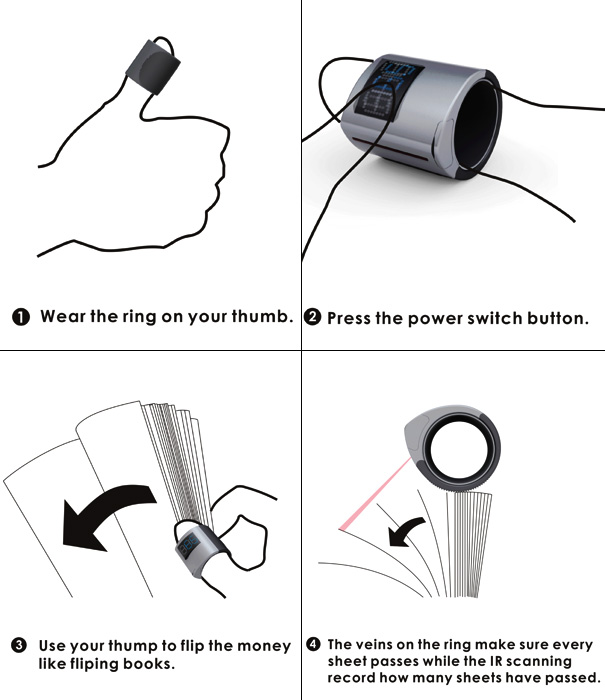
So much cash stashed at home that fingers get tired while counting! Who wouldn’t want to live that life! The truth is that small business and maybe some households do have that kind of money, and the big counting machines currently available are inconvenient. So the solution lies in a compact Counting Ring, a simplified money counting machine. It packs in features like LED Display & Power Switch, Sheet-Separating Veins, Battery Slot and Infrared Ray Scanning. Slip it on the thumb and you’re set. My only worry would be a bundle of soiled and crumpled notes, however overall for a majority of cash-stash, this should do.
Designers: Wei Hansen, Li Shaochen, Xu Jinrui, Qi Yibin & Zhao Ying



Nicks!
Overcoming The Blind Spots While Driving
Ever been a victim to blind spots while driving? The Full-Rear-View Windscreen Monitor aids in overcoming those spots so that you have a safer drive. The system consists of consists of two parts: a windscreen display and micro cameras installed on the car’s exterior. It uses the upper part of the windscreen to display a real-time image of the vehicle’s surroundings (as captured by the cameras). I think the option could prove to be a double-edged sword, because plenty of you driving veterans are sure gonna get distracted by the secondary display!
Here is how the system works:
Here is how the system works:
The micro cameras are set up on both the sides and back of the car. Image processing technology is incorporated. The separate images captured by the micro cameras are combined and displayed on the windscreen seamlessly. The advanced technology used means that even in low-light conditions (for example, at night or on rainy days), visibility is still very good. Furthermore, a car full of passengers or cargo will not impede the driver’s vision.
Designer: Ho-Tzu Cheng


 |
Back to the Typewriter
Now here is a media center project unlike any I’ve ever seen before. Inspired by the iconic typewriter he has at his desk, (a Lettera 22,) thinking about the futuristic world we live in and will live in in the future, this designer decided to combine the aesthetics of the typewriter with the guts of a modern day media center. A media center, for those of you who’ve get to get on board, is a computer specially equipped to act as your television hookup.
All your movies, shows, and everything is on there, and now this device made by Carlo Convertini, a device by the name of “Back to the Future,” aims to represent that machine in the body of a typewriter. It’s different from the classic Letter 22 of course, having a detachable keyboard, printing instead of keys-to-ink typing, and that oh-so-important digital storage space. Take a look at the extended details on this machine in the images below. Lots to see, lots to click, lots of RED!
Designer: Carlo Convertini


I Can See Through Your Juice

The Second Life Mobile Phone Concept works on the premise that we often forget about the battery life of our mobile phones, hence run out of juice, just at the wrong time. As a remedy (rather power-saver-option) the phone incorporates a double display. When in active use the AMOLED screen powers up in all glory and in standby mode the E-ink display gets active. This essentially means that the E-ink uses very little energy and the degree of transparency of the display shows how much battery is remaining. The more transparent the display, the less battery remaining.
So besides ultra-low power consumption, the transparent screen offers an intuitive expression: “You’re low on juice so better recharge the phone soon!” Apparently the E-ink uses power to change the degree of transparency and doesn’t add to the battery load.
I like the idea behind the concept and its transparent vibe, but I guess its more aimed at a niche set of people who keep forgetting to put their phone on charge.
Designers: Cho Sinhyung & Jeon Jungjae


1950s Inspired Retro Philco PC Looks Incredible

 Everyone is getting rid of their desktops because laptops are just more convenient to use. A bunch of people are also jumping into Macs, since they are easier to use. That being said, it's always nice to have a large screen and a computer that runs fast. The new iMacs are great because they are a confluence of different technology, HDTVs and computers integrated into one streamlined form.
 In an effort to make desktops PCs more beautiful and relevant, Dave Schultze came up with a really interesting concept, the Philco PC. Schultze was inspired by the classic Philco Predicta TVs from the fifties. We think that it just looks amazing and should most definitely be made a reality. The beautiful monitor and desktop are combined with a typewriter-like keyboard and mouse, which made us think of Steampunk.
Subscribe to:
Posts (Atom)